Monday, March 30, 2020

Kartoita kallioperää HY:n geotieteen opiskelijoiden kanssa!

Tule mukaan tekemään Helsingin yliopiston Kallioperägeologian kenttäkurssin harjoitustehtävää! 

Tehtävän alkuperäisenä tarkoituksena oli korvata keväältä koronavirustilanteen vuoksi peruuntunutta kontaktiopetusta ja antaa opiskelijoille mahdollisuus harjoitella itsenäisesti kallioperähavaintojen tekemistä tutussa ympäristössä. Samalla tutustutaan hieman Suomen kallioperän kivilajeihin kurssilaisten tekemien havaintojen ja niistä tehdyn yhteisen koonnin avulla.

Varsinainen kurssilaisten tekemä harjoitustehtävä toteutetaan suljetulla kurssialustalla mutta havainnointiin voi osallistua kuka tahansa ja kaikki kurssin aikana kirjatut havainnot ovat mukana yhteiskoonnissa, joka päivittyy osana tätä julkaisua. Tehtävä sopii kaikille luonnosta ja kallioperän kivilajeista kiinnostuneille ja pienellä perehtymisellä myös esimerkiksi yläkoululaisille tai lukiolaisille maantiedon/maantieteen itsenäiseksi havainnointitehtäväksi.

Tehtävä on yliopiston kurssilaisille täysin vapaaehtoinen, eikä sitä tehdessä ole tarkoitus pakottaa ketään liikkumaan esimerkiksi julkisilla liikennevälineillä tarpeettomasti! Ulkona liikkuessa on muutenkin syytä muistaa turvavälit ja tilanteen mukainen toiminta.

Ajatuksena on, että geologisia havaintoja voi tehdä liikkumalla jalkaisin kotoa vaikkapa lenkkeillessä tai muuten ulkoillessa. Parhaassa tapauksessa kivilajihavaintoja voi tehdä jopa omassa pihapiirissä, lähimetsikössä tai -puistossa. Esimerkiksi pääkaupunkiseudulla on Helsingin keskustaa myöden lähes mahdotonta liikkua kovin pitkiä matkoja näkemättä kalliopaljastumaa tai louhittua kallioleikkausta. Tarkoitus on hyödyntää näitä "lähipaljastumia" kallioperähavaintojen tekemisen harjoitusaineistona.

Mitä tehdään:

Etsi kalliopaljastuma, jolla voit tehdä havaintoja suoraan kallion pinnalta niin, ettei sinun tarvitse paljastaa kalliota lisää, vasaroida murtopintaa, kiivetä vaaralliseen paikkaan tai mennä jonkun toisen pihapiiriin. Lähtökohta on, että havainto tehdään joko omassa pihassa tai julkisella paikalla kenenkään muun omaisuutta, tekemistä tai elinkeinoa häiritsemättä ja omaa turvallisuutta vaarantamatta. Varmistu kuitenkin aina, että teet havainnon kiintokalliosta, etkä esimerkiksi isosta siirtolohkareesta.

Vinkkejä kivilajien tarkasteluun, luokitteluun ja tunnistamiseen löydät mm. seuraavista osoitteista.

GTK:n Retkeilijän kivioppas (sivut. 44-55): http://tupa.gtk.fi/julkaisu/erikoisjulkaisu/ej_060.pdf
Kivikone-sivusto: https://www.kivikone.fi/
Geologia.fi: http://www.geologia.fi/index.php/2018/04/23/suomen-kalliopera-opetusmateriaali-gtk/

Tutki paljastuma ja kirjaa siitä ylös ainakin seuraavat asiat:
  • Havainnon tekijä ja havaintoajankohta
  • Sijainti sanallisesti (esim. kaupunki, kaupunginosa, puiston nimi tms.)
  • Paljastuman koordinaatit EUREF-FIN koordinaattijärjestelmässä (nämä saat muuntamalla esim. puhelimen Google Maps -sovelluksesta saadut koordinaatit paikkatietoikkunan https://kartta.paikkatietoikkuna.fi/ sovelluksessa tai arvioimalla havaintopisteesi sijainnin myöhemmin tietokoneella)
  • Paljastuman koko (X m kertaa Y m) ja tyyppi (tieleikkaus, rantakallio, jne.)
  • Paljastuman havaintopinnat (silokallio, tieleikkaus/tuore murtopinta, rapaumapinta jne.)
  • Listaa paljastuman kivilajit (anna kivilajeille kenttänimet ja arvioi niiden määräsuhteet)
  • Kuvaile kivilajit (raekoko, mineraalien laatu ja määräsuhteet eli moodi, suuntaus, väri jne.)
  • Rakenteita ei voi ilman geologista kompassia mitata, mutta ne voi kuvailla (mainitse esim. raitaisuus, kerroksellisuus, liuskeisuus, poimuttuneisuus jne.)
  • Kuvaile kivilajien suhteet toisiinsa (esim. graniitti tunkeutuu juonina liuskeeseen tms.)
  • Ota paljastumasta edustava valokuva, jossa esiintyy mahdollisimman paljon kuvailemiasi asioita. Muista laittaa kuvaan myös mittakaavaksi jokin tunnetun mittainen esine, jonka mitat ilmoitat myös kuvatekstissä (esim. "Mittakaavana kynä, 11 cm").
Anna havainnollesi myös havaintotunnus, joka on muotoa KPK20-APHE-001, jossa KPK20 on kaikille kursisn havainnoille yhteinen, nelikirjaiminen tunnus muodostetaan kahden ensimmäisen etunimesi etukirjaimista ja sukunimesi kahdesta ensimmäisestä kirjaimesta (Aku P. Heinonen --> APHE) ja kolminumeroinen luku kertoo havainnon juoksevan numeron -001, -002, -003... jne. Voit siis luonnollisesti tehdä myös useampia kuin yhden havainnon, jos innostusta riittää!

Kirjoita havaintosi alla olevalle keskustelupalstalle tai lähetä ne sähköpostitse alla olevaan osoitteeseen. Alla on myös esimerkkihavainto, josta voit ottaa mallia ja koontikartta, jolle palautetut havainnot päivittyvät vähintään parin päivän välein. Havaintoja otetaan vastaan näillä näkymin ainakin toukokuun loppuun asti.

Kysymyksiä voi esittää joko tämän postauksen kommenteissa tai sähköpostitse

Kurssin opettaja:
Yliopistonlehtori Aku Heinonen
Helsingin yliopiston Geotieteiden ja maantieteen osasto
aku.heinonen@helsinki.fi

Koonti 10.5.2020 (klikkaa kartta kuvasta isommaksi)


Esimerkkihavainto:

Havainnon tekijä ja havaintoajankohta
Aku Heinonen, 29.3.2020, klo 16:05

Sijainti sanallisesti
Helsinki, Hallainvuori, Viilarintien tieleikkaus

Paljastuman koordinaatit EUREF-FIN koordinaattijärjestelmässä
391774, 6677374

Paljastuman koko ja tyyppi
150 m pitkä ja n. 12 m korkea pystysuora tieleikkaus (Kuva 1).

Kuva 1. Yleiskuva Viilarintien paljastumasta.

Paljastuman havaintopinnat
Vanha tienrakennuksessa louhittu murtopinta, joka pääosin jäkälöitynyt, mutta paikoin tuoreempia kohtia, joista havainnointi vielä mahdollista.

Kivilajit
Gneissi (voisi kuvata myös graniittina ja kiilleliuskeena)

Kivilajikuvaus
Paljastuman pääkivilaji on raidallinen, voimakkaasti suuntautunut gneissi, jossa vuorottelevat tummat, biotiittivaltaiset raidat ja vaaleanpunaiset graniittiset raidat. Raitojen paksuus vaihtelee n. 1-30 cm. Tummat raidat ovat pääosin ohuempia kuin vaaleat. Tummat raidat koostumukseltaan biotiittia (100%) ja hienorakeisia. Vaaleiden raitojen mineraalikoostumus hyvin leukokraattinen, päämineraalit kalimaasälpä (80%) ja kvartsi (15-20%), vaihtelevasti plagioklaasia, mutta pääosin alle 5%. Graniittisten osien raekoko vaihtelee n. 1-50 mm (vallitseva raekoko karkearakeinen), paikoin jopa pegmatiittisia osia.

Rakenteet
Raitaisuus on havaintopinnalla pääosin pystysuoraa ja lähes lineaarista tai loivasti poimuttuvaa (Kuva 2).


Kuva 2. Paljastuman pääkivilaji, jossa näkyvät vuorottelevat tummat ja vaaleanpunaiset raidat. Mittakaava: matkakortin pitkä sivu on n. 9,5 cm.


Friday, December 27, 2019

"Rocks and minerals" -video appearance on YouTube

I was recently asked by Markus Salamander, a nature documentary enthusiast, to visit his YouTube channel to talk about rocks and minerals and their identification. Our session boiled down to an almost one and a half hours chat on geology, rocks, and their formation processes. Check the video out below (unfortunately only in Finnish) or on Markus's channel.


Thursday, December 12, 2019

#geologisetmateriaalit mineral poster

All the mineral pictures from this autumn's Geological materials (#geologisetmateriaalit) course with mineral names and chemical formulas are now compiled into a neat poster licensed under CC-BY-NC-SA 4.0.

A2-size PDF is available upon request from aku.heinonen@helsinki.fi.

Most of the samples come from the University of Helsinki Department of Geosciences and Geography teaching collections curated by the Finnish Museum of Natural History (LUOMUS).


Thursday, October 3, 2019

Stepping up the macro game

Since I started my daily geological materials posts on social media a couple of weeks ago, I’ve constantly been thinking and researching ways to improve the quality of my mineral macro shots. I have a decent basic Canon full frame set-up of 6D (v.1) with a 100 mm 2.8/L macro lens and have been using external LED elements for main lighting but many of the objects I want to take pictures of still do not yield to the physical restrictions of optical realities.

Main issue in macro photography is the focal depth that very much starts to become an issue in the cm-scales of mineral samples. For focal depth you need more light but long exposures make magnified shots prone to shaking and other external problems. The basic set-up just hasn’t been enough to achieve all the things I’ve wanted to image and I’ve constantly been looking at some alternatives to improve the situation.

In mid-September, we took the first year students to the traditional “freshman” field trip in Southeastern Finland. One of the stops on the trip is a gem-quality topaz quarry around the town of Kotka, which has been quarried by several mineral clubs on and off for the past decades. I remember going there with my tutors when I started my studies as well.

The quarry is located in the Kymi topaz granite stock, which is associated with the ca. 1.64 Ga Wiborg area rapakivi magmatism (you can read more about rapakivi granites for example here), and it is possible to find nice amazonite, fluorite, dendritic biotite, and even beryl samples there. The main attraction, however, is the slightly bluish and, at its best, transparent gem-quality topaz. For many years, the yield of the annual trip has not been very good as most of the good samples have already been hounded from the surface and no one has been doing any recent blasting at the site. This year turned out to be a bit different…

Three of the students were able to find some very nice, rather clear and euhedral topaz crystals. The largest one was a 1,4 cm long stubby crystal, with at least five prisms {110}, {120}, {110}, {210}, and {011}, 2 or 3 bipyramides {111}, {221}, and possibly {112}, and a terminating pinacoid {001}.

I was allowed to loan the crystal to take some shots but was again not happy with the way the first round of images turned out so I was finally motivated to invest a bit to get the shot I wanted. I ended up ordering a ring flash, extension tube set, and an adjustable macro rail in order to fine-tune the focal depth for focus stacking. Below you can see some results. There is always room for improvement especially in the far end of the focus range, but with this, I already start to be quite satisfied…

Canon 6D; 100 mm 2.8/L macro; GENESIS GMR-150 macro rail; Viltrox extension tubes: 12+20+36 mm; Meike FC110 ring flash (LED-mode); ISO160, F/6.3, 1/30; focus stack of seven images (Adobe PS edits). Length of crystal: 1.4 cm.

Wednesday, September 25, 2019

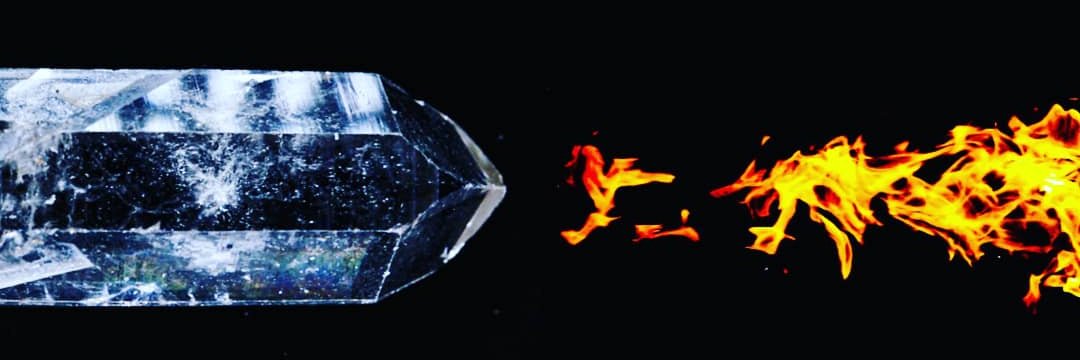
Crystal and flame - An essay on Italo Calvino and geosciences


The latest edition of Geologi-magazine of the Geological Society of Finland (SGS) features an article I have been basically writing on and off for the past ten years. The paper is not really a scientific contribution but reflects on the many ideas and personal inspirations I have experienced while reading the works of the Italian author Italo Calvino throughout the last decade.

Originally I found Calvino through his Cosmicomics short stories and was fascinated by the way he digested and presented scientific theories and ideas in his unparalleled style and had found innovative ways to write about the complexities of the natural world. I quickly noticed there were plenty of geological and especially mineralogical parallels in many of his works and remember being completely paralyzed by his depictions of time and temporal experience in general.

Most of Calvino's ideas on time I have later found embedded for example in the works of Hannah Arendt (Vita Activa especially), Max Frisch (Homo Faber), and many many others. However, Calvino was always the first, and I still annually return to his "Six Memos for the Next Millennium" to refresh my points of view.

After getting more and more familiar with his works throughout the years, I started seeing this overarching theme that finally about a year ago coalesced into a concrete framework and found its home in the recent work on thermodynamic modeling of igneous systems that we have been developing in our research group. It became clear to me that Calvino's entire production could be portrayed in terms parallel to thermodynamic systems and many of the minutiae and details actually followed very similar logic to the principles of modeling thermodynamic equilibria.

The ideas of juxtaposed crystal and flame depicted in Calvino's "Six Memos" became the leading principles of my interpretation of his work already early on, but only now they found their true meaning and everything kinda fell into place.

At the beginning of the year, I started working on the essay by rewriting some earlier passages and compiled notes from old notebooks etc. Over the winter lecture break in March I re-read the entire translated works of Calvino in order to clarify the image I had put together in my head and finished polishing the essay in May. There had been many earlier attempts at getting everything into context but this thing couldn't had been written at any other time than right now.

Seeing the article in print meant more to me than I dared to admit earlier on, but I am really happy with the way that it turned out. I'm glad that now I'm able to share these ideas also with everyone else. I think I won't touch much of his other work in a while, but I will still try to read the "Six Memos" every year. Every time it seems to have something more to offer...

You can read the entire article here (only in Finnish for now, except for the short summary, sorry) and if you have something to share about it, please drop a line. Several readers of the print edition have already contacted me but I hope the online version will reach an even broader interested readership.


Monday, September 23, 2019

TSV Science photography exhibit, 24 Sep - 16 Jan

Early this year, I found out about a Science Photography Competition organized by TSV (The Federation of Finnish Learned Societies) as a part of their 120th anniversary celebrations.

Around that time I had also started a macro photography project to update some of the mineralogy teaching materials for my geological materials course and gradually developed the idea that some of the images would possibly be suitable for the competition.

The series I ended up submitting came to be called "Platon's five-fold mistake" and it features four images of minerals in the isometric crystal system that have a strong euhedral tendency each in the shape of one of the five Platonic solids: magnetite (octahedron), pyrite (dodecahedron), fluorite (cube), and tetrahedrite (tetrahedron). The fifth image in the series features a structural model of the last Platonic solid, icosahedron, which is not permitted as a crystal form due to its non-periodic five-fold rotational symmetry. Therefore, there are also no minerals that could take up its form. Icosahedron has, however, been observed in synthetic materials and also in some very minute phases related to meteorite impacts in which it is said to form quasi-periodic structures, or quasicrystals.


I guess the jury is still out about the inclusion of quasi-crystalline materials in the official mineral family but, regardless, the founder of the first quasi-periodic structure Dan Shechtman was awarded the 2011 Nobel price in chemistry for his discovery.

The results of the photography competition were made public today in TSV's 120th anniversary celebrations and at the same time the related photography exhibition was opened for the public at Tieteiden talo (house of sciences) in Helsinki.

Even though I did not place in the competition, I was very happy to find out that two of my pictures had the honor of being featured in the exhibit. The exhibit will be open, free of charge, until "The Night of the Science", which will be organized on January 16th next year.

Go check it out if you're in town...

Further reading on quasicrystals:

Bindi et al. 2009. Natural quasicrystals. Science 324: 1306-1309.

Shechtman, D. 2013. Quasi-periodic crystals - the long road from discovery to acceptance. Rambam Maimonides Medical Journal.

Thursday, September 19, 2019

On Dark Crystals…

A recent Guardian long read piece on “Dark Crystals” has popped up on my feed several times in the past couple of days and it sparked some immediate but maybe not too coherent responses in my head. Regardless of coherence, here are some thoughts:

Basically the piece is reporting that:

1) The demand for crystals (sensu lato) has been on the increase due to their alleged health effects.

2) Crystals are mined in hazardous conditions by people who don’t benefit (enough) of their perilous efforts.

The article then proceeds to describe several first hand accounts on these conditions and the people who have to deal with them. Alongside of not really defining what crystals in this context are, what is almost completely left out of the report is the “alleged” part in the health effect claims.

Lets be clear; there are none!

If a health effect is claimed it needs to be verified. In order for something to be verified, it needs to be observed. No observations of said health effects have been made. Full stop, period. To claim something else is unethical, at the least.

Where do the urge and need to come up with some bogus magical properties of natural objects then stem from? Crystalline structures with their many unbelievable and aesthetically astounding (and 100% scientifically proven) properties are already in themselves natural wonders and nothing short of an actual real life miracle! Where lies the need to invent something more? There is still so much we don’t understand about the true and really exciting phenomena in the crystalline world.

I can think of two reasons:

First is the primal need for people to come up with supernatural explanations for natural phenomena. This is further amplified by the inherent complexity and mathematical characteristics of nature (and especially crystalline matter). It's more difficult to understand things in order to explain them but very easy to come up with stories, analogues, and anecdotes, which follow some made up internal logic.

Secondly, and more importantly, there is financial benefit from feeding these said beliefs. This is the worse of the two and also the major machinery behind the problems described in the Guardian piece.

However, observations about problems in tracing supply chains made in the article are true for almost all modern commodities. I am not sure why the situation with crystals or minerals would be somehow special. Without belittling the troubles of people featured in the article, the framework descriptions of small-scale crystal mining could basically be replaced with a description of an Asian t-shirt factory. The problems are the same: lousy pay for strenuous and risky work, mostly executed by under-aged children.

I guess mining has an eerie aura to it nowadays and these kinds of stories somehow fit the prejudices of the tarnished industry image better than other products used in everyday life.

The reason why this topic resonates with me is that I feel rather passionately about the intricacies of crystalline structure and its actual scientific study. I also use the aesthetics of natural symmetry displayed by natural minerals to teach mineralogy and crystallography. The awe arisen by euhedral natural crystals is proven to be an intuitive and effective motivator to find out more about the inner workings of the natural world. There is, however, nothing supernatural about them, only pure and beautiful natural symmetry.

Maybe the line between bogus health claims and acknowledging the reality of the crystal realm is thinner than I have previously thought…

To underline, the long read logic is correct and I 100% agree that the business they describe is flawed on many levels.