Showing posts with label crystals. Show all posts

Wednesday, September 25, 2019

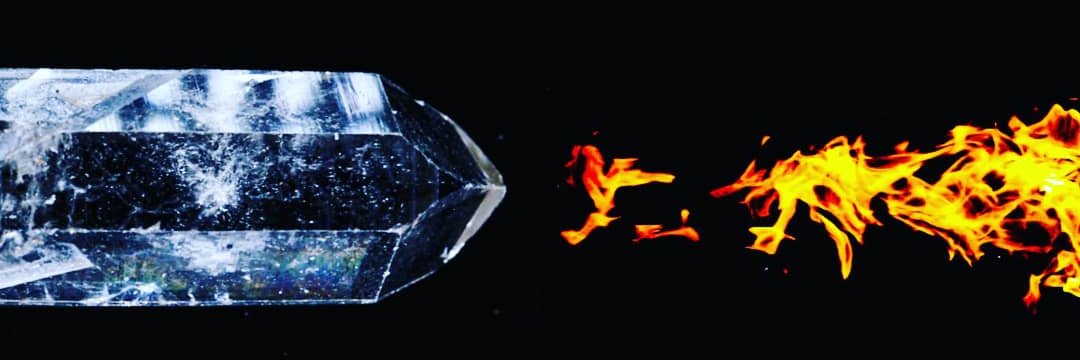
Crystal and flame - An essay on Italo Calvino and geosciences


The latest edition of Geologi-magazine of the Geological Society of Finland (SGS) features an article I have been basically writing on and off for the past ten years. The paper is not really a scientific contribution but reflects on the many ideas and personal inspirations I have experienced while reading the works of the Italian author Italo Calvino throughout the last decade.

Originally I found Calvino through his Cosmicomics short stories and was fascinated by the way he digested and presented scientific theories and ideas in his unparalleled style and had found innovative ways to write about the complexities of the natural world. I quickly noticed there were plenty of geological and especially mineralogical parallels in many of his works and remember being completely paralyzed by his depictions of time and temporal experience in general.

Most of Calvino's ideas on time I have later found embedded for example in the works of Hannah Arendt (Vita Activa especially), Max Frisch (Homo Faber), and many many others. However, Calvino was always the first, and I still annually return to his "Six Memos for the Next Millennium" to refresh my points of view.

After getting more and more familiar with his works throughout the years, I started seeing this overarching theme that finally about a year ago coalesced into a concrete framework and found its home in the recent work on thermodynamic modeling of igneous systems that we have been developing in our research group. It became clear to me that Calvino's entire production could be portrayed in terms parallel to thermodynamic systems and many of the minutiae and details actually followed very similar logic to the principles of modeling thermodynamic equilibria.

The ideas of juxtaposed crystal and flame depicted in Calvino's "Six Memos" became the leading principles of my interpretation of his work already early on, but only now they found their true meaning and everything kinda fell into place.

At the beginning of the year, I started working on the essay by rewriting some earlier passages and compiled notes from old notebooks etc. Over the winter lecture break in March I re-read the entire translated works of Calvino in order to clarify the image I had put together in my head and finished polishing the essay in May. There had been many earlier attempts at getting everything into context but this thing couldn't had been written at any other time than right now.

Seeing the article in print meant more to me than I dared to admit earlier on, but I am really happy with the way that it turned out. I'm glad that now I'm able to share these ideas also with everyone else. I think I won't touch much of his other work in a while, but I will still try to read the "Six Memos" every year. Every time it seems to have something more to offer...

You can read the entire article here (only in Finnish for now, except for the short summary, sorry) and if you have something to share about it, please drop a line. Several readers of the print edition have already contacted me but I hope the online version will reach an even broader interested readership.


Thursday, September 19, 2019

On Dark Crystals…

A recent Guardian long read piece on “Dark Crystals” has popped up on my feed several times in the past couple of days and it sparked some immediate but maybe not too coherent responses in my head. Regardless of coherence, here are some thoughts:

Basically the piece is reporting that:

1) The demand for crystals (sensu lato) has been on the increase due to their alleged health effects.

2) Crystals are mined in hazardous conditions by people who don’t benefit (enough) of their perilous efforts.

The article then proceeds to describe several first hand accounts on these conditions and the people who have to deal with them. Alongside of not really defining what crystals in this context are, what is almost completely left out of the report is the “alleged” part in the health effect claims.

Lets be clear; there are none!

If a health effect is claimed it needs to be verified. In order for something to be verified, it needs to be observed. No observations of said health effects have been made. Full stop, period. To claim something else is unethical, at the least.

Where do the urge and need to come up with some bogus magical properties of natural objects then stem from? Crystalline structures with their many unbelievable and aesthetically astounding (and 100% scientifically proven) properties are already in themselves natural wonders and nothing short of an actual real life miracle! Where lies the need to invent something more? There is still so much we don’t understand about the true and really exciting phenomena in the crystalline world.

I can think of two reasons:

First is the primal need for people to come up with supernatural explanations for natural phenomena. This is further amplified by the inherent complexity and mathematical characteristics of nature (and especially crystalline matter). It's more difficult to understand things in order to explain them but very easy to come up with stories, analogues, and anecdotes, which follow some made up internal logic.

Secondly, and more importantly, there is financial benefit from feeding these said beliefs. This is the worse of the two and also the major machinery behind the problems described in the Guardian piece.

However, observations about problems in tracing supply chains made in the article are true for almost all modern commodities. I am not sure why the situation with crystals or minerals would be somehow special. Without belittling the troubles of people featured in the article, the framework descriptions of small-scale crystal mining could basically be replaced with a description of an Asian t-shirt factory. The problems are the same: lousy pay for strenuous and risky work, mostly executed by under-aged children.

I guess mining has an eerie aura to it nowadays and these kinds of stories somehow fit the prejudices of the tarnished industry image better than other products used in everyday life.

The reason why this topic resonates with me is that I feel rather passionately about the intricacies of crystalline structure and its actual scientific study. I also use the aesthetics of natural symmetry displayed by natural minerals to teach mineralogy and crystallography. The awe arisen by euhedral natural crystals is proven to be an intuitive and effective motivator to find out more about the inner workings of the natural world. There is, however, nothing supernatural about them, only pure and beautiful natural symmetry.

Maybe the line between bogus health claims and acknowledging the reality of the crystal realm is thinner than I have previously thought…

To underline, the long read logic is correct and I 100% agree that the business they describe is flawed on many levels.