Wednesday, September 25, 2019

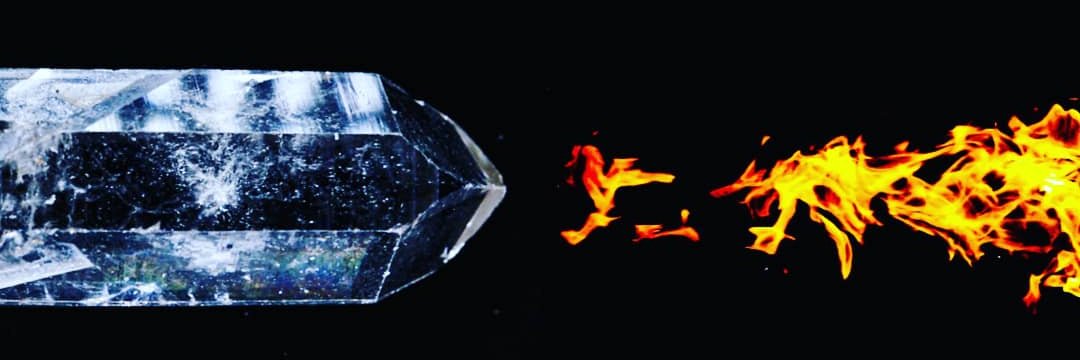
Crystal and flame - An essay on Italo Calvino and geosciences


The latest edition of Geologi-magazine of the Geological Society of Finland (SGS) features an article I have been basically writing on and off for the past ten years. The paper is not really a scientific contribution but reflects on the many ideas and personal inspirations I have experienced while reading the works of the Italian author Italo Calvino throughout the last decade.

Originally I found Calvino through his Cosmicomics short stories and was fascinated by the way he digested and presented scientific theories and ideas in his unparalleled style and had found innovative ways to write about the complexities of the natural world. I quickly noticed there were plenty of geological and especially mineralogical parallels in many of his works and remember being completely paralyzed by his depictions of time and temporal experience in general.

Most of Calvino's ideas on time I have later found embedded for example in the works of Hannah Arendt (Vita Activa especially), Max Frisch (Homo Faber), and many many others. However, Calvino was always the first, and I still annually return to his "Six Memos for the Next Millennium" to refresh my points of view.

After getting more and more familiar with his works throughout the years, I started seeing this overarching theme that finally about a year ago coalesced into a concrete framework and found its home in the recent work on thermodynamic modeling of igneous systems that we have been developing in our research group. It became clear to me that Calvino's entire production could be portrayed in terms parallel to thermodynamic systems and many of the minutiae and details actually followed very similar logic to the principles of modeling thermodynamic equilibria.

The ideas of juxtaposed crystal and flame depicted in Calvino's "Six Memos" became the leading principles of my interpretation of his work already early on, but only now they found their true meaning and everything kinda fell into place.

At the beginning of the year, I started working on the essay by rewriting some earlier passages and compiled notes from old notebooks etc. Over the winter lecture break in March I re-read the entire translated works of Calvino in order to clarify the image I had put together in my head and finished polishing the essay in May. There had been many earlier attempts at getting everything into context but this thing couldn't had been written at any other time than right now.

Seeing the article in print meant more to me than I dared to admit earlier on, but I am really happy with the way that it turned out. I'm glad that now I'm able to share these ideas also with everyone else. I think I won't touch much of his other work in a while, but I will still try to read the "Six Memos" every year. Every time it seems to have something more to offer...

You can read the entire article here (only in Finnish for now, except for the short summary, sorry) and if you have something to share about it, please drop a line. Several readers of the print edition have already contacted me but I hope the online version will reach an even broader interested readership.


Monday, September 23, 2019

TSV Science photography exhibit, 24 Sep - 16 Jan

Early this year, I found out about a Science Photography Competition organized by TSV (The Federation of Finnish Learned Societies) as a part of their 120th anniversary celebrations.

Around that time I had also started a macro photography project to update some of the mineralogy teaching materials for my geological materials course and gradually developed the idea that some of the images would possibly be suitable for the competition.

The series I ended up submitting came to be called "Platon's five-fold mistake" and it features four images of minerals in the isometric crystal system that have a strong euhedral tendency each in the shape of one of the five Platonic solids: magnetite (octahedron), pyrite (dodecahedron), fluorite (cube), and tetrahedrite (tetrahedron). The fifth image in the series features a structural model of the last Platonic solid, icosahedron, which is not permitted as a crystal form due to its non-periodic five-fold rotational symmetry. Therefore, there are also no minerals that could take up its form. Icosahedron has, however, been observed in synthetic materials and also in some very minute phases related to meteorite impacts in which it is said to form quasi-periodic structures, or quasicrystals.


I guess the jury is still out about the inclusion of quasi-crystalline materials in the official mineral family but, regardless, the founder of the first quasi-periodic structure Dan Shechtman was awarded the 2011 Nobel price in chemistry for his discovery.

The results of the photography competition were made public today in TSV's 120th anniversary celebrations and at the same time the related photography exhibition was opened for the public at Tieteiden talo (house of sciences) in Helsinki.

Even though I did not place in the competition, I was very happy to find out that two of my pictures had the honor of being featured in the exhibit. The exhibit will be open, free of charge, until "The Night of the Science", which will be organized on January 16th next year.

Go check it out if you're in town...

Further reading on quasicrystals:

Bindi et al. 2009. Natural quasicrystals. Science 324: 1306-1309.

Shechtman, D. 2013. Quasi-periodic crystals - the long road from discovery to acceptance. Rambam Maimonides Medical Journal.

Thursday, September 19, 2019

On Dark Crystals…

A recent Guardian long read piece on “Dark Crystals” has popped up on my feed several times in the past couple of days and it sparked some immediate but maybe not too coherent responses in my head. Regardless of coherence, here are some thoughts:

Basically the piece is reporting that:

1) The demand for crystals (sensu lato) has been on the increase due to their alleged health effects.

2) Crystals are mined in hazardous conditions by people who don’t benefit (enough) of their perilous efforts.

The article then proceeds to describe several first hand accounts on these conditions and the people who have to deal with them. Alongside of not really defining what crystals in this context are, what is almost completely left out of the report is the “alleged” part in the health effect claims.

Lets be clear; there are none!

If a health effect is claimed it needs to be verified. In order for something to be verified, it needs to be observed. No observations of said health effects have been made. Full stop, period. To claim something else is unethical, at the least.

Where do the urge and need to come up with some bogus magical properties of natural objects then stem from? Crystalline structures with their many unbelievable and aesthetically astounding (and 100% scientifically proven) properties are already in themselves natural wonders and nothing short of an actual real life miracle! Where lies the need to invent something more? There is still so much we don’t understand about the true and really exciting phenomena in the crystalline world.

I can think of two reasons:

First is the primal need for people to come up with supernatural explanations for natural phenomena. This is further amplified by the inherent complexity and mathematical characteristics of nature (and especially crystalline matter). It's more difficult to understand things in order to explain them but very easy to come up with stories, analogues, and anecdotes, which follow some made up internal logic.

Secondly, and more importantly, there is financial benefit from feeding these said beliefs. This is the worse of the two and also the major machinery behind the problems described in the Guardian piece.

However, observations about problems in tracing supply chains made in the article are true for almost all modern commodities. I am not sure why the situation with crystals or minerals would be somehow special. Without belittling the troubles of people featured in the article, the framework descriptions of small-scale crystal mining could basically be replaced with a description of an Asian t-shirt factory. The problems are the same: lousy pay for strenuous and risky work, mostly executed by under-aged children.

I guess mining has an eerie aura to it nowadays and these kinds of stories somehow fit the prejudices of the tarnished industry image better than other products used in everyday life.

The reason why this topic resonates with me is that I feel rather passionately about the intricacies of crystalline structure and its actual scientific study. I also use the aesthetics of natural symmetry displayed by natural minerals to teach mineralogy and crystallography. The awe arisen by euhedral natural crystals is proven to be an intuitive and effective motivator to find out more about the inner workings of the natural world. There is, however, nothing supernatural about them, only pure and beautiful natural symmetry.

Maybe the line between bogus health claims and acknowledging the reality of the crystal realm is thinner than I have previously thought…

To underline, the long read logic is correct and I 100% agree that the business they describe is flawed on many levels.


Saturday, September 14, 2019

Geological materials on Twitter

I was recently inspired by a really nice book on research and professional communication in social media by Petro Poutanen (@petropoutanen) and Salla-Maaria Laaksonen (@jahapaula).

Faktat nettiin is a really good manual for any researcher who would like to take up a more active role on social media, bring forth their expertice on broader forums, or generally just develop themselves as a communicator.


It sure got my juices flowing...

Previously I've mostly been only following some interesting topics, people, and handles on Twitter but after reading this book I got the inspiration to try moving some of my posts from Instagram to Twitter. From there, things got out of control pretty fast as I got the idea to migrate some of my Geological materials course teaching materials also there...

The plan at this point is to tweet a picture of a mineral (or other cool stuff) from the course's teaching materials and to deliver a related short infoid every day for as long as the course is running this semester. Let's see how this takes off...

You can follow the #geologisetmateriaalit hashtag to keep up (and me @AkuHeinonen) also on Instagram.

Wednesday, May 1, 2019

Student projects picking up some momentum

Just a quick note on a couple of student projects that were successfully launched during the Q1/2019.

Petrology of the Suvasvesi granitoid intrusion in northern Savonia

The first one, SUVAS-19, was graciously funded by the K.H. Renlund foundation and will partly be realized in collaboration with the Battery Minerals project operations ran by the Geological Survey of Finland in Northern Savonia. The aim of the project is to map and study the mineralogy and petrology of the ca. 1.87 Ga Suvasvesi granitoid intrusion and its relationship with nearby pegmatites intruding the Paleoproterozoic metasediment sequences of the Viinijärvi suite.

Hanna Rantanen is the MSc student who has been hired to do the field work and hopefully we will see some nice results already by the end of the year.

http://projects.gtk.fi/akku/index.html
http://khrenlund.fi/en/

Mineralogy and petrography of the Kuohenmaa orbicular quartz monzonite

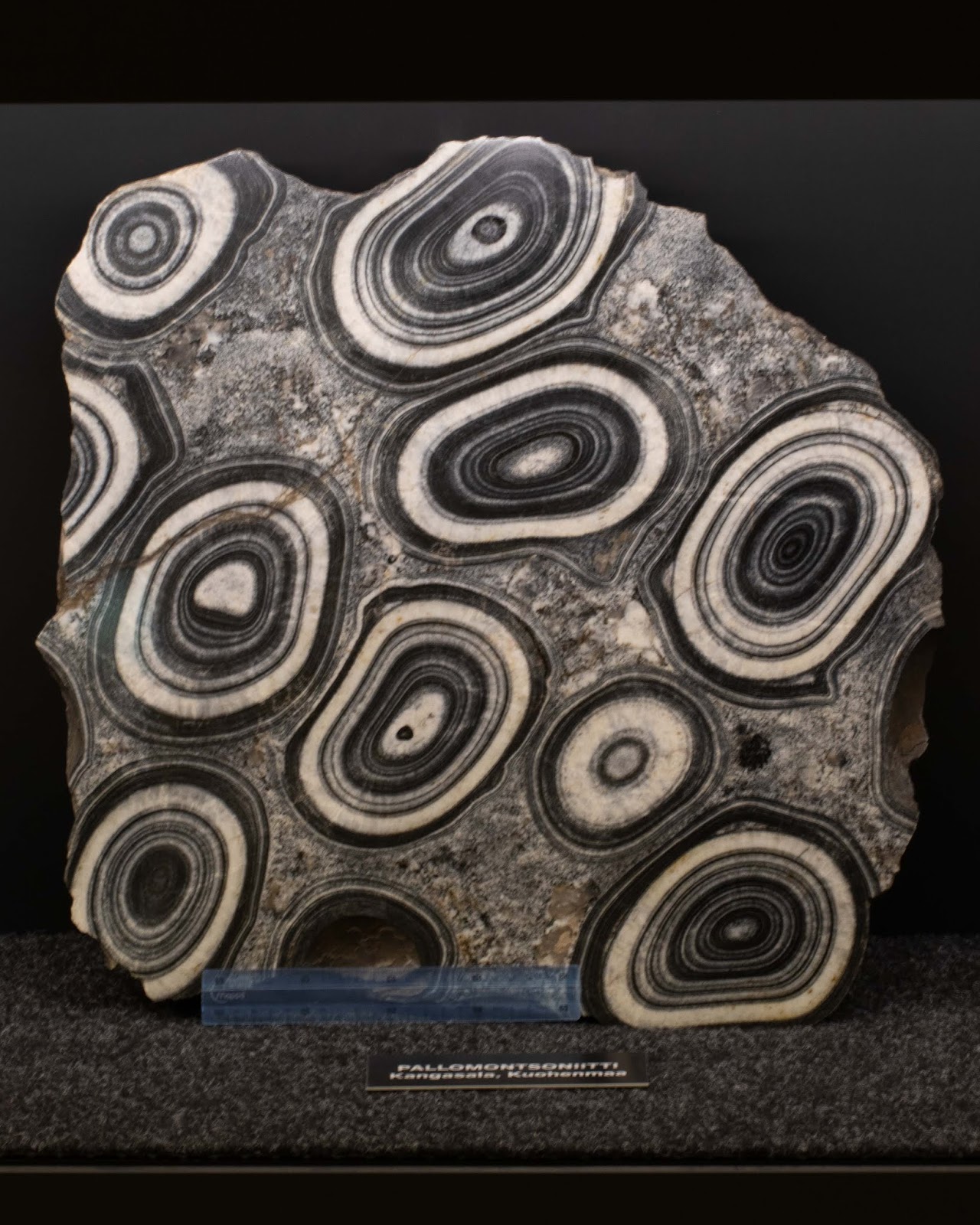
Another student project will take a closer look at some orbicular rocks and especially at this stage the world-class multi-shelled example from Kuohenmaa in Kangasala. The Kuohenmaa orbicular quartz monzonite has a particularly well-developed orbicular structure consisting of a core and several alternating radial plagioclase-rich shells and tangential biotite-rich shells.

One of the largest samples of the Kuohenmaa orbicular quartz monzonite from the collections of the Geological Survey of Finland. The Survey was very kind to let us take detailed pictures of their samples for research purposes. The ruler used as a scale is 20 cm long.

The petrogenesis of orbicular rocks is controversial and several theories have been suggested to explain how the orbicules were formed. The two prominent theories suggest their origin to relate either to generation of local diffusion-controlled enrichment fronts onto the orbicules crystallizing from magma or cyclic changes in crystallization pressure or temperature. In this project, major and trace element mineral chemical analyses combined with statistical petrography will be used to test the applicability and validity of existing orbicule-forming theories and, if possible, create a new hypothesis for orbicule forming process of the Kuohenmaa orbicular rock.

The student working on this topic is Minna Markkanen and she has already made some very interesting discoveries based on very basic petrographic observations. She gave a poster at the Geoscience Colloquium earlier this year on the topic and is making strong progress also on other fronts. You can read more about recent discoveries in the abstract volume of the meeting, p 42:

http://www.geologinenseura.fi/files/Abstract_Collection_v1-5th_National_Colloquium_of_Geosciences.pdf


Thursday, December 13, 2018

Wrap-up of the year 2018...

The year 2018 comes to a close and now there's finally some extra time (not really) to summarize some recent achievements and milestones...

1) A new PhD project!
The year got off to a great start as Riikka Fred got funding from DONASCI to study the monzodioritic rocks and evolution of the anorthosite parental magmas in Ahvenisto. This was great in many respects, not least due to the fact that we finally got to collaborate with Jussi Heinonen and his PALIN project for this one. Riikka has been working hard all year and the labors have also born some nice fruit...

2) Journal of Petrology Paper
This was a long running project that went over a lot of hindrances but finally saw the light of day in early 2018. Technically the paper was published in the last JPET issue of 2017 but the editorial handling ended only in March. Finally something complete to show for he SA project...

3) Teacher of the year award
The students elected me as the teacher of the year 2017. It was great to get acknowledged for all the hard work put into the first year of teaching. Looking back at it, I would do many things differently... but wouldn't change a day...

4) New teaching duties
As the Department lost invaluable P. Heikkilä to the Geological Survey last spring I stepped up to take the extra teaching load and ditched most of my old stuff in return. Preparing the materials and teaching basic crystallography and mineralogy has taken most of the past year but has been really rewarding. Research duties have had to take a second row seat because of this though...

5) Mineral photography
Teaching the basic mineral course has given a nice excuse to photograph plenty of mineral samples for lecture notes and there might be some additions to this site as well in the near future... am planning to add a page for the best shots but need to think more about the layout possibilities still... stay tuned...

6) Two new MSc projects
I was able to launch two new MSc resarch projects, one to go even deeper into the mineral chemistry of Ahvenisto complex and to assist Riikka in her project and another to finally take a closer look at the Kangasala orbicular rocks. Both projects are still in their infancy but promise to get more wind under their wings at the beginning of next year... exciting times...

7) Riikka's first paper!!!
Riikka's first research paper was accepted for publication (today) and with that the monzodiorite project takes a major leap forward... more to come next year... Look out for the first edition of the Bulletin of the Geological Society of Finland next year...

That's about it... will add more if something pops up... maybe more frequent updates from now-on... :D


Friday, June 2, 2017

OpenFIRE in the books and some other stuff

Lots of new stuff going on...

The end of May saw my last contributions to the FIRE-ATT project at the Insitute of Seismology. During the past nine months I contributed to five external pieces and four conference papers on the OpenFIRE project and presented the application and the project in five conferences and other marketing forums.

Bulk of the project on my behalf is, however, still unpublished as the full version of the application is not yet released and the geological descriptions that were my main responsibility in the OpenFIRE are going to be out only when it happens. You can still check out the beta (or the full version when it gets released) here.

Anyways, good times, but now it's time to move on to other things.

Starting from the beginning of June I have returned to the Division of Geology and Geochemistry. First as a visiting scholar and from the beginning of August in the position of a University Lecturer in petrology.

Beginning in the fall most of my time will, therefore, be spent teaching basic petrology but during the summer I will mostly be concentrating on my book project. Also hoping to finally(!) tie up some loose research project ends before the teaching hassle begins.

So, major gears shifting but I'm excited at the face of all the new challenges...